
Reviewed · FOOD & DRINK
Cooking Class for Typical Ugandan Food in Kampala
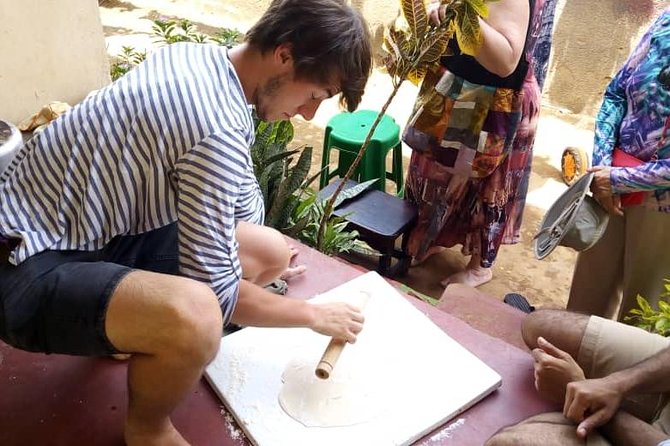
Ugandan food becomes much easier to understand when you help prepare it. In this four-hour Kampala class, Gertrude leads you through local ingredients, traditional cooking methods, and a shared vegetarian meal. Banana leaves, plantains, cassava, yams, pumpkin, and matooke make this feel like a real home kitchen visit, not a quick demonstration.
I like the small group limit of 10, which gives you room to ask questions and take part rather than watch from the back. I also like the warm personal setting with Gertrude and her son, plus the chance to learn about native plants and enjoy the view from their home while the food cooks.
The main consideration is location. The class meets at Steve Residence on Little Muheji School Road in Nansana, outside central Kampala, so you should allow time to reach the meeting point and confirm your transport plans before the class begins.
Key points to know before you book
- You prepare a full vegetarian Ugandan meal, including staples such as matooke and dishes made with local produce.
- Gertrude hosts the class with her son, creating a friendly home-based setting rather than a formal cooking school.
- Banana leaves are part of the process, giving you a close look at a traditional way to prepare and serve food.
- The class lasts about four hours, with time for peeling, slicing, cooking, conversation, and eating.
- The group is capped at 10 people, a useful limit for hands-on instruction.
- The price is $32 per person, which is fair if you value a personal meal and cultural exchange as much as the cooking lesson.
Why this Kampala cooking class feels personal
The best part of this class is the setting. You are not simply shown a plate of Ugandan food and handed a recipe card. You work with the ingredients from the first step, then eat what you helped make.
That starts with basic kitchen tasks such as peeling and slicing. Cassava, yams, pumpkin, and plantains may be familiar names, but handling them tells you more than a menu does. You see the size, texture, and preparation involved before these foods reach the pot.
Gertrude also introduces you to native plants used in everyday life. This adds useful context to the meal. You learn that local food is not just about flavor. It is tied to what grows nearby, what families know how to prepare, and how food is handled at home.
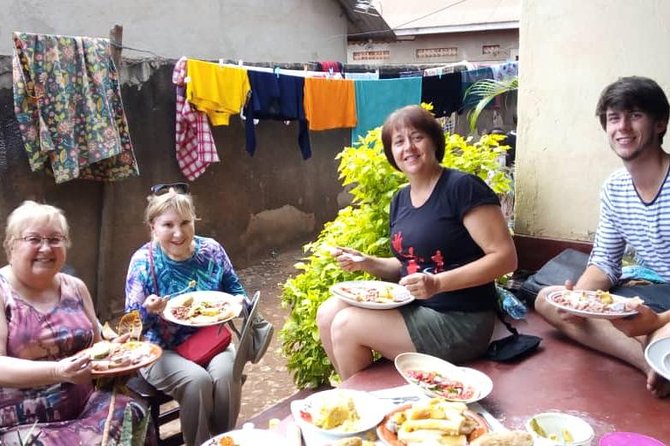
The atmosphere is informal. You can expect time to chat, share stories, and enjoy the company of your hosts. Gertrude’s young son is part of the setting, which adds to the feeling that you have been welcomed into a household rather than placed in a staged class.
That personal touch matters in Kampala, where a cooking lesson can give you a better sense of daily life than a standard sightseeing stop. You leave with food in your stomach, but also with a clearer idea of how ingredients move from plant to plate.
A few more Kampala trips to weigh up
- Private Ugandan Food Cooking Class and Culture Experience
★ 5.0 · 6 reviews - Like a local cooking Tours
★ 4.0 · 4 reviews
Preparing matooke and other Ugandan staples
Matooke is one of the key foods to expect. It is made from cooking bananas and is a major Ugandan staple. The class gives you a chance to take part in its preparation instead of meeting it only as a finished mound on a restaurant plate.
You also work with other local produce, including cassava, yams, pumpkin, and plantains. These ingredients make the lesson useful for people who want to recreate part of the meal at home. You learn through touch and action, which can be more helpful than simply writing down instructions.
The food is vegetarian. That is important to note before booking. If you are looking for a class centered on meat, fish, or several different protein dishes, this will not be the right match. If you enjoy plant-based food, the focus gives you a clear look at Uganda’s vegetable staples and sauces.
One especially appealing part of the meal is the groundnut sauce. It received particular praise, and it may become the dish you remember most. Groundnuts, commonly known as peanuts, add body and a savory, nutty flavor to simple vegetables and starches.
The exact order of the cooking may depend on what is being prepared that day. Still, the basic pattern is clear: peel, process, cook, and eat together. That hands-on rhythm makes the four hours feel like a complete food lesson rather than a short tasting.
Banana leaves, traditional methods, and the value of doing the work
Banana leaves are one of the most interesting details of the class. They show you how food can be prepared and served with materials that are part of the local environment. You are not only learning recipes. You are seeing practical methods that have meaning in Ugandan kitchens.
This is also where the class offers more value than a restaurant meal. At a restaurant, you taste the finished dish. Here, you get to understand why the dish looks and feels the way it does.
The work may include tasks that seem simple, but that is part of the point. Peeling and slicing produce gives you time to ask how it is used, how it is cooked, and what makes it part of a typical Ugandan meal. You can compare those methods with the habits of your own kitchen.
I would not book this expecting a polished chef-led performance with a strict timetable. The appeal is the home setting and direct participation. The lesson is likely best for someone who enjoys conversation, practical work, and a relaxed pace.
If you are nervous about cooking, do not worry too much. The class is designed around shared preparation, and Gertrude explains how to cook the vegetables. You are not expected to arrive with expert knife skills or prior knowledge of Ugandan cuisine.
Four hours at Steve Residence in Nansana
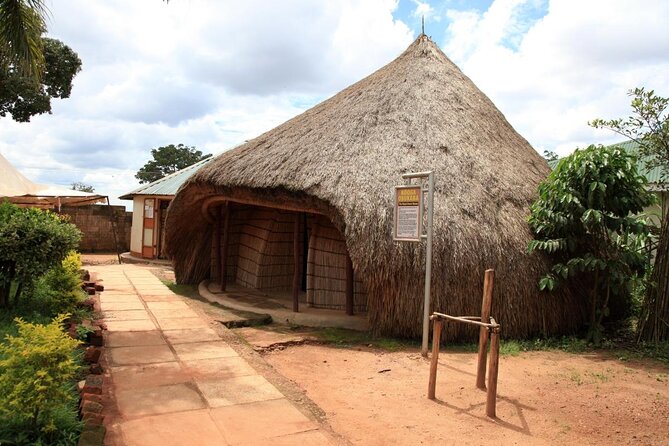
The class begins and ends at Steve Residence, Little Muheji School Road, Nansana, Uganda. Since the activity returns to the same meeting point, you do not need to arrange a separate end location.
The meeting point is near public transportation, but the information provided does not specify a pickup service or a detailed transfer plan. I would confirm the exact arrival instructions when booking. If you are staying in central Kampala, allow extra time for the journey to Nansana and avoid scheduling another fixed activity too close to the end of the class.
The four-hour duration is useful because cooking has a natural pace. Ingredients need to be prepared, dishes need time to cook, and a shared meal should not feel rushed. You also have time for conversation and for taking in the view from the home.
One practical point is the weather. The activity requires good weather, and poor conditions can lead to a different date or a full refund. Keep that in mind if your Kampala schedule is tight.
The class is generally booked about eight days ahead. That is a useful guide for planning, especially if you want a particular day. The maximum of 10 participants helps keep the lesson manageable, but a smaller group is not guaranteed.
Same base, a completely different kind of trip:
- 3 Hours Guided Cycling Tour Across Lake Victoria
★ 5.0 · 151 reviews - Kampala’s Best Experience walking tour
★ 5.0 · 137 reviews - 3 Days gorilla trekking Safari tour in Uganda
★ 5.0 · 121 reviews - Lake Victoria Island Cycling Tour from Kampala
★ 5.0 · 120 reviews
What the personal hosting adds
Gertrude is the heart of the class. Her role goes beyond showing you how to cook. She explains the ingredients, shares local knowledge, and creates space for conversation.
The setting with Gertrude and her son has been described as friendly and welcoming. You may chat about Kampala, exchange stories, and even dance while the food is cooking. That may sound like a small detail, but it helps explain why this class feels different from a standard food workshop.
The view from the home is another pleasant feature. It gives you something to enjoy during cooking breaks and creates a good place for photographs. The view is not the main reason to book, but it adds a welcome pause while pots are on the stove.
You should also expect the lesson to be social. If you want a quiet, private cooking appointment, check the booking details carefully. The group can include up to 10 people, and the meal is meant to be prepared and enjoyed together.
For solo visitors, this kind of class can be an easy way to meet people without the forced structure of a group sightseeing tour. For couples and families, it offers a shared activity where everyone can contribute. It may also suit anyone who wants a gentler morning or afternoon away from Kampala’s roads and city sights.
Eating the meal you helped prepare
The final meal is the reward, but it is also part of the lesson. You sit down and eat the food together, giving you a chance to taste each dish with a better understanding of how it was made.
Expect a plant-based Ugandan meal built around staple foods rather than a long list of separate courses. Matooke, vegetables, plantains, root vegetables, and groundnut sauce form the main appeal.
This makes the class particularly useful if you plan to eat local food during the rest of your Uganda trip. You will recognize ingredients more easily and may feel more confident ordering dishes whose names are unfamiliar.
The meal is also a chance to ask final questions. You can talk about how the food is served, which dishes are common at home, and what parts of the process you might manage in your own kitchen. Since you have taken part from start to finish, the meal has a sense of place that a simple tasting lacks.
Do keep your expectations realistic. The class is focused on traditional vegetarian cooking, not on advanced restaurant techniques. You are paying for access to a local kitchen, instruction, food, and time with a host. That is the right way to judge its value.
Is $32 a fair price?
At $32 per person, this is a reasonably priced half-day activity in Kampala. The value depends on what you want from a cooking class.
If you only want to eat Ugandan food, you may find a restaurant meal for less. But that would not include four hours of guided preparation, ingredient handling, a shared meal, and personal conversation with a local host.
I think the price works best for people who value participation. You are learning how food is peeled, cooked, wrapped, served, and eaten. You also get a cultural exchange that is difficult to price by the dish alone.
The small group limit strengthens the value. With no more than 10 participants, the class should offer more opportunity to help and ask questions than a large demonstration. Still, the price does not appear to include transport to Nansana, so factor that into your day’s budget.
The perfect five-star rating and full recommendation record point to a consistently well-received activity. I would still focus on fit rather than chasing a score. This is a home-based, vegetarian, social cooking session. If those three points appeal to you, $32 is a sensible spend.
Who should book this food experience?
I would recommend it most strongly to:
- People who want a local meal with direct participation
- Visitors interested in plant-based Ugandan food
- Solo visitors looking for a social activity
- Couples and families who enjoy cooking together
- Anyone curious about ingredients such as matooke, cassava, yams, and groundnuts
- Travelers with half a day available in Kampala
It may be less suitable if you want a central-city activity, a private class, a meat-focused menu, or a short demonstration. The trip to Nansana also means you should not treat this as a quick stop between tightly scheduled attractions.
The activity can be booked with free cancellation up to 24 hours before the start time for a full refund. Changes or cancellations made less than 24 hours ahead are not accepted for a refund, and poor weather can result in a new date or a full refund.
Should you book Gertrude’s cooking class?
Book this class if you want to do more than taste Ugandan food. You will peel local produce, learn traditional preparation methods, work with banana leaves, cook vegetarian staples, and sit down with Gertrude and her son to eat the result.
I especially like the combination of hands-on cooking and home hospitality. The groundnut sauce, the view, the native plants, and the easy conversation add character without taking the focus away from the food.
Skip it if your schedule cannot spare four hours, if reaching Nansana is difficult, or if you are hoping for a meat-based menu. For the right visitor, though, this is an affordable and personal way to spend part of a Kampala day.
FAQ
Where does the cooking class begin and end?
The class begins at Steve Residence, Little Muheji School Road, Nansana, Uganda. The activity ends back at the same meeting point.
How long does the cooking class last?
The class lasts approximately four hours.
What type of food is prepared?
The class focuses on vegetarian Ugandan food. You help prepare local produce such as cassava, yams, pumpkin, and plantains, along with staples such as matooke and groundnut sauce.
Who leads the cooking class?
Gertrude leads the class with her son. She explains the ingredients and cooking methods while you prepare and eat the food together.
How many people can join?
The activity has a maximum of 10 participants.
How much does the class cost?
The listed price is $32 per person.
Can I cancel for a full refund?
Yes. You can cancel at least 24 hours before the experience start time for a full refund. Cancellations or changes made less than 24 hours before the start time are not refunded, and the cut-off is based on local time.
More Workshops in Kampala
- Kampala: Hands-On Chocolate Making Experience
★ 4.9 · 18 reviews
More Food in Kampala
- Kampala: Three-Hour Food Tour
★ 4.6 · 15 reviews - Nighttime Boda Boda Street Food Tour
★ 5.0 · 6 reviews - Fishing Village Food Tour & Luwombo Stop
★ 5.0 · 3 reviews
Just added around Kampala
- 7-Day Uganda Adventure Safari – Midrange Lodges★ 5.0 · 3 reviews
- Entebbe kampala airport transfers★ 5.0 · 3 reviews
- 5 days gorillas and chimpanzee tracking★ 4.5 · 3 reviews
- 3 Days Murchison Falls Wildlife Safari★ 4.5 · 3 reviews
- A Thrilling 1-Day Rhino Tracking Tour in Uganda★ 5.0 · 3 reviews
- 4-Day QENP, Gorillas in Bwindi and Lake Bunyonyi relaxation★ 5.0 · 3 reviews
- 3 Days Private Tour in Murchison Falls National Park★ 5.0 · 3 reviews
- Kampala: Female-Guided Walking Tour★ 3.7 · 3 reviews
Food & Drink, compared.

Private Ugandan Food Cooking Class and Culture Experience
Read our review →
Browse the lists this tour appears in