
Reviewed · COOKING CLASSES
Like a local cooking Tours
Kampala’s best food lesson may be the one that starts before the cooking pot. With a local female guide, you head toward Owino Market, help choose ingredients, and then cook in a family home with women such as Fatumah, Rosette, Hannah, and Doreen. The food comes with conversation about Ugandan customs, family life, and daily routines.
I like the market-to-home format, because you see food in its ordinary setting instead of only meeting it on a plate. I also like the women-led social purpose: the activity supports female training for girls and helps provide clean drinking water for rehabilitated street children.
The main thing to watch is the cost of the food. The $26 price covers the tour service and lunch, but you should expect to pay separately for ingredients bought for cooking, plus your own drinks and transport to the host’s home. Confirm the exact plan before setting out.
Key points to know before you book
- Owino Market adds a practical start: You help shop for the ingredients rather than simply watching a demonstration.
- The cooking takes place in a family home: This gives you time for conversation and a closer look at everyday food customs.
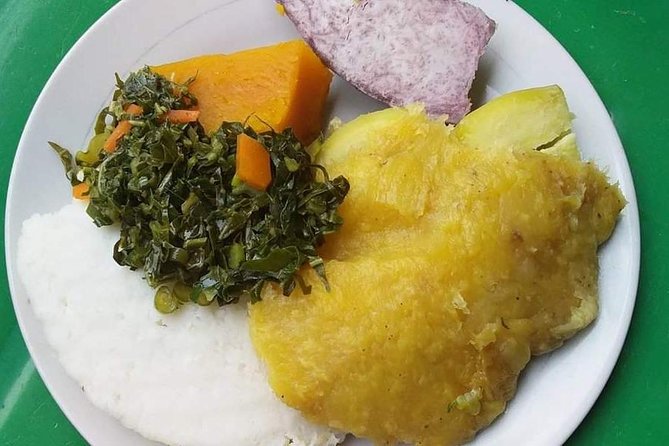
- Matooke is a hands-on lesson: You may learn how to peel the plantains correctly and steam them in matooke leaves.
- The group is capped at 10 people: That is small enough for a more personal kitchen visit.
- The $26 price is not all-inclusive: Ingredients, alcoholic beverages, and transport to the host’s home are extra.
- The experience supports local causes: Your booking helps fund female skills training and clean water access for rehabilitated street children.
From Uganda National Mosque to Owino Market
The activity begins at Uganda National Mosque on Old Kampala Road. This is a useful central meeting point, and the experience ends there too, so you do not need to arrange a separate return location.
From the mosque, the food story begins with shopping. A trip to Owino Market makes the cooking feel grounded in Kampala life. You are not simply handed a prepared basket of ingredients. You help select what will be used, which gives you a better sense of the produce, the shopping process, and the decisions behind a Ugandan meal.
The market portion also sets the tone for the day. You can ask your guide about the ingredients as you go, and the shopping gives the group something practical to do before settling into the kitchen. For many visitors, this will be the most useful part of the experience because it links food with ordinary buying habits.
Do keep your expectations sensible. The experience does not promise a market tour with a long historical commentary or a formal tasting at every stall. Its purpose is to gather food for cooking. If you enjoy learning through action, that is a plus. If you want a polished chef-led demonstration with every item provided in advance, this is probably not your ideal format.
A few more Kampala trips to weigh up
- Cooking Class for Typical Ugandan Food in Kampala
★ 5.0 · 25 reviews - Private Ugandan Food Cooking Class and Culture Experience
★ 5.0 · 6 reviews
Cooking in a Kampala family home
After shopping, you go to the host’s home to cook, eat, and talk. The home setting is important. You are not in a restaurant dining room or a purpose-built cooking school. You are sharing space with local women and taking part in a meal that connects to family routines and Ugandan traditions.
Fatumah’s family home is specifically part of the experience described by the operator, and the women who host the visits are central to its appeal. Names associated with the cooking and home visits include Fatumah, Rosette, Hannah, and Doreen. The exact guide or host assigned to your booking may differ, so confirm that when you arrange the date.
The social side may matter as much as the food. You have time to discuss different cultures, family life, cooking habits, and the meaning of particular dishes. This is not a silent class where you copy instructions and leave. The format encourages questions and ordinary conversation, which can make the visit feel more personal.
At the same time, a family home requires flexibility. Timing may not feel as tightly controlled as it would in a commercial kitchen. You should be ready to listen, help, and follow the host’s pace. That is part of the trade-off: you get a less polished but more personal setting.
Learning matooke from peeling to steaming

One of the most useful food lessons is matooke, a staple made from green cooking bananas. The preparation itself gives you a job, not just a photo opportunity. You may learn how to peel the plantains correctly and how they are steamed in matooke leaves.
That detail makes the class worthwhile. Peeling matooke can take practice, and a local cook can show you how to handle it without wasting the fruit. Steaming the food in leaves also shows how local cooking methods use available materials and build flavor and texture into the dish.
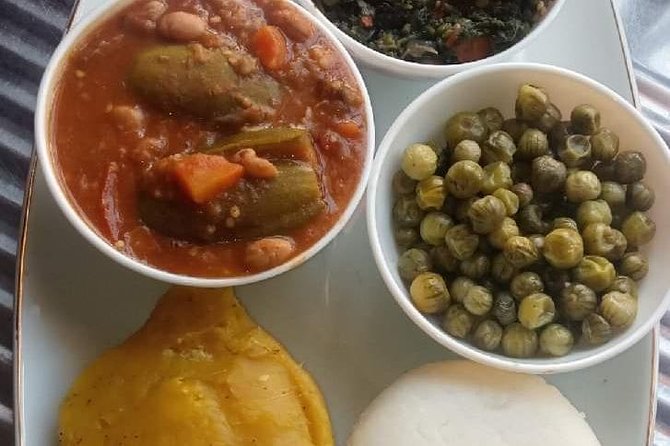
Rosette is associated with a particularly well-received cooking session, including a butternut dish and matooke preparation. The precise menu is not fixed in the information available, so you should not book expecting one guaranteed set of recipes. Ingredients are selected for the meal, and the menu may depend on what is bought and what the host plans to prepare.
The young female student chef adds another layer to the activity. You are not only receiving instruction from an established host. You are also helping support practical training for a young woman building cooking skills. That makes the experience feel useful beyond the four hours you spend in the kitchen.
Eating together, not just taking a cooking class
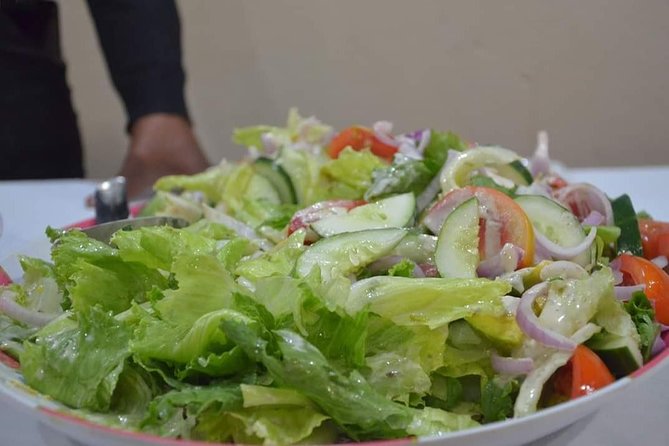
Lunch is included, and sharing it with the people who prepared it is one of the strongest parts of the plan. You cook, sit down, and eat together rather than separating the demonstration from the meal.
That arrangement gives you a chance to ask about the dishes while they are still fresh in your mind. You can discuss how the food is served, how it fits into family life, and how it compares with meals you know at home. The meal becomes a natural part of the conversation, not an afterthought.
Drinks are not fully covered. Alcoholic beverages are specifically excluded, and other food or drink purchases may also be part of your shopping costs. Bring enough money for the ingredients selected by the group and for anything you want to buy beyond the included lunch.
The phrase lunch included should not be read as every food expense included. The provider has clarified that shoppers pay for the food and drinks prepared during the activity. That is the detail most likely to affect your budget, so ask for a clear estimate before the tour starts.
Same base, a completely different kind of trip:
- 3 Hours Guided Cycling Tour Across Lake Victoria
★ 5.0 · 151 reviews - Kampala’s Best Experience walking tour
★ 5.0 · 137 reviews - 3 Days gorilla trekking Safari tour in Uganda
★ 5.0 · 121 reviews - Lake Victoria Island Cycling Tour from Kampala
★ 5.0 · 120 reviews
What the $26 price really buys you

At $26 per person, this is priced below many formal cooking schools and private food activities. The value is strongest if you want a small-group introduction to Kampala through people, shopping, and home cooking rather than a restaurant meal.
Your payment gives you access to local guides, the cooking experience, lunch, and the social setting. It also helps support the female training project and clean water work for rehabilitated street children. For a visitor who values direct community benefit, that purpose adds weight to the price.
But you should not compare $26 with an all-inclusive excursion. Transportation to the host’s home is not included. The cost of ingredients is extra, shopping fees are extra, and alcoholic drinks are extra. If you are traveling on a strict budget, these additional amounts can make the final cost less predictable.
I would treat the advertised price as the charge for organizing and guiding the experience, with the meal ingredients added separately. The operator has acknowledged that unclear communication about this point caused disappointment for at least one participant. Confirm these details by message before booking, especially if you expect a longer food-focused day.
There is also a timing point to settle. The current details describe an activity of about four hours with lunch. An earlier description apparently created an expectation of six hours with both lunch and dinner. You should rely on the current four-hour format and ask the provider to confirm the start time, finish time, and meal plan.
Group size, transport, and practical comfort
The maximum group size is 10 people. That is a useful limit for a home kitchen. You should have a better chance to take part, ask questions, and speak with the hosts than you would in a large bus group.
The activity is near public transportation, but transportation fees to the host’s home are not included. The meeting point is Uganda National Mosque, and the activity returns there at the end. Ask how the group will move between the meeting point, market, and home, since the available information does not give a fixed transport method or fare.
Most people can participate, according to the activity information. Still, cooking involves standing, handling ingredients, and moving through a market and home setting. If you have mobility, dietary, or food-allergy concerns, contact the provider before booking because the available details do not explain how those needs are handled.
The ticket is mobile, and confirmation is sent at booking. Keep the confirmation available on your phone, and make sure your guide has your working contact details. That is especially useful here because the meeting point and the host’s home are separate places.
The women-led purpose behind the meal
The social purpose is not a decorative extra. The guides are local women, and the activity includes a young female student chef. Money from the experience helps support free female training for girls and access to clean, safe drinking water for rehabilitated street children.
That gives you a direct way to connect a meal with practical local support. You are still paying for a guided activity, not making a donation alone, but your booking helps maintain a project with a clear community focus.
The women who host the cooking and conversation are also part of the experience’s human value. You have room to talk about food, culture, and different ways of life. The visit may suit you especially well if you prefer meeting people in their own setting and learning through conversation rather than moving quickly from one sight to the next.
The cause should not make you overlook the practical terms. Ask what is included, bring money for shopping, and understand that the home visit may feel informal. A good social purpose does not remove the need for clear planning.
Who will enjoy this Kampala experience most?
I would recommend it to you if you want to:
- Learn about Ugandan food by preparing it yourself
- Visit a local market with a clear purpose
- Share a meal in a family home
- Meet local women and a young student chef
- Talk about culture through food and daily life
- Support female training and clean water access
- Spend a half-day in a small group
It may be less suitable if you want a fully prepaid package, a fixed menu, hotel pickup, or a professional restaurant kitchen. It is also not the best choice if you dislike spending extra time shopping or prefer to observe rather than handle ingredients.
The activity works well for solo visitors, couples, and small groups who want a personal way to meet Kampala. Families and older children may enjoy it too, but the supplied information does not give a minimum age, so ask before booking with children.
Booking advice and cancellation terms
Free cancellation is available if you cancel at least 24 hours before the local start time. Cancellations made inside that window are not refunded, and changes made less than 24 hours before the start are not accepted.
The activity depends on suitable weather and a minimum number of participants. If poor weather or low enrollment causes cancellation, you can choose another date or experience, or receive a full refund.
These terms are fairly simple, but the cost details deserve more attention than the cancellation rules. Before you pay, confirm the four-hour length, lunch arrangement, ingredient cost, transport to the host’s home, and the exact meeting instructions.
Should you book Like a Local Cooking Tours?
Book it if you want Kampala through food, conversation, and a family kitchen. The Owino Market shopping, matooke preparation, shared lunch, and women-led format give the activity more substance than a quick cooking demonstration.
Skip it if you need every expense included or want a carefully timed culinary class. The extra shopping cost and informal home setting are real considerations.
For the right person, $26 is a fair starting price for a small-group cultural experience with a useful social purpose. Just confirm the add-on costs first, then arrive ready to peel matooke, ask questions, and help make lunch.
FAQ
Where does the activity begin?
It begins at Uganda National Mosque on Old Kampala Road in Kampala, Uganda.
Where does the activity end?
The activity ends back at the meeting point at Uganda National Mosque.
How long does the experience last?
The current activity details describe an experience lasting about four hours.
Is lunch included?
Yes, lunch is included.
Are ingredients included in the price?
No. You should expect to pay separately for the food and drinks bought for preparation.
Is transportation to the host’s home included?
No. Transportation fees to the host’s home are not included.
How many people can join?
The activity has a maximum of 10 participants.
Just added around Kampala
- 7-Day Uganda Adventure Safari – Midrange Lodges★ 5.0 · 3 reviews
- Entebbe kampala airport transfers★ 5.0 · 3 reviews
- 5 days gorillas and chimpanzee tracking★ 4.5 · 3 reviews
- A Thrilling 1-Day Rhino Tracking Tour in Uganda★ 5.0 · 3 reviews
- 4-Day QENP, Gorillas in Bwindi and Lake Bunyonyi relaxation★ 5.0 · 3 reviews
- 3 Days Murchison Falls Wildlife Safari★ 4.5 · 3 reviews
- Kampala: Female-Guided Walking Tour★ 3.7 · 3 reviews
- 3 Days Private Tour in Murchison Falls National Park★ 5.0 · 3 reviews
Cooking Classes, compared.
Cooking Class for Typical Ugandan Food in Kampala
Read our review →
Private Ugandan Food Cooking Class and Culture Experience
Read our review →Browse the lists this tour appears in