
Reviewed · WORKSHOPS
Kampala: Hands-On Chocolate Making Experience
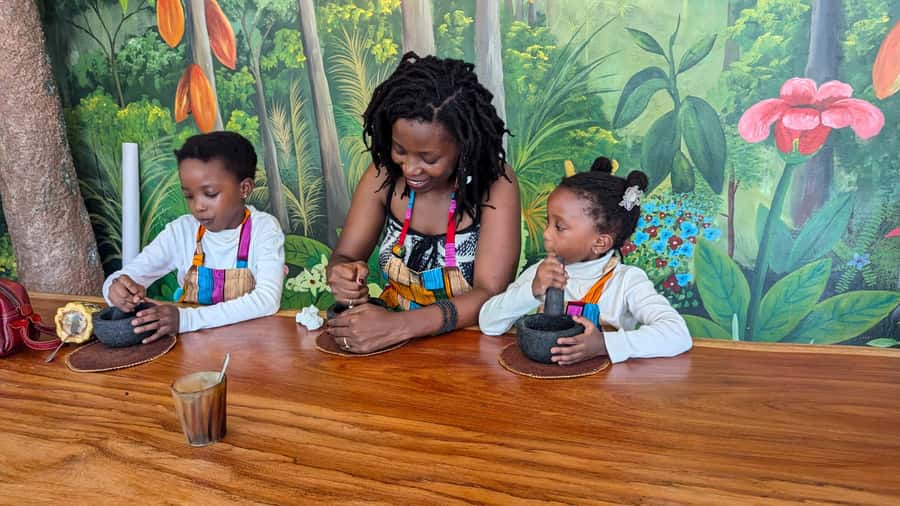
The best part of this experience is that chocolate starts with the fruit, not a shiny wrapper. You taste a fresh cocoa pod, walk through a working cocoa garden, and then follow the beans into the processing room. I especially like the farm-to-bar route and the fact that you make a chocolate bar with your own toppings. The spicy Aztec drink adds a welcome taste of chocolate’s older traditions.
I also like the small, practical touches: aprons and ingredients are supplied, Joy can help with photos and videos, and the chocolate you make is yours to share later. The main consideration is the meeting point in Bugolobi, while the activity information also identifies Mityana District, so check the exact location when booking. Transportation is not included.
Key points at a glance
- Taste the cocoa fruit first: Try fresh cocoa pod pulp before seeing how the beans become chocolate.
- Walk through a cocoa garden: Learn about flowering, fruit growth, harvesting, and the farm stages.
- Work through the bean: Roast, winnow, and grind cocoa yourself rather than watching a demonstration only.
- Make an Aztec-style drink: Prepare a rich, spicy chocolate drink inspired by ancient cocoa traditions.
- Take home your own bar: Temper chocolate, pour it into a mold, add toppings, and keep the finished result.
- Meet in Bugolobi: Moonbean Chocolate is at Plot 71, Luthuli Avenue, at The Dancing Cup Restaurant, opposite Union House.
From cocoa pod to chocolate bar in two hours
This is a compact workshop with a clear purpose: show you how a raw cocoa fruit becomes the chocolate you know. In two hours, you move between the garden, the processing room, and the work area where you make your own bar.
That timing works well for a Kampala day. You get more than a tasting, but you do not lose half a day to a long excursion. The session is also suitable for families with older children, couples, and solo visitors who prefer an activity with something tangible to take home.
The experience is conducted in English. Joy is one of the named facilitators associated with the session, and she helps guide the practical work as well as photographs and videos. That matters because the workshop includes several stages where an extra pair of hands is useful, especially when you are roasting, grinding, tempering, and filling molds.
The activity has a strong educational side, but it is not a classroom lecture. You are expected to taste, handle, mix, and make decisions. If you only want to eat chocolate, this may feel like too much process. If you want to understand what sits behind the finished product, the sequence makes good sense.
Other Kampala trips people book alongside this one:
- 3 Hours Guided Cycling Tour Across Lake Victoria
★ 5.0 · 151 reviews - Kampala’s Best Experience walking tour
★ 5.0 · 137 reviews - 3 Days gorilla trekking Safari tour in Uganda
★ 5.0 · 121 reviews
The first taste: fresh cocoa straight from the pod
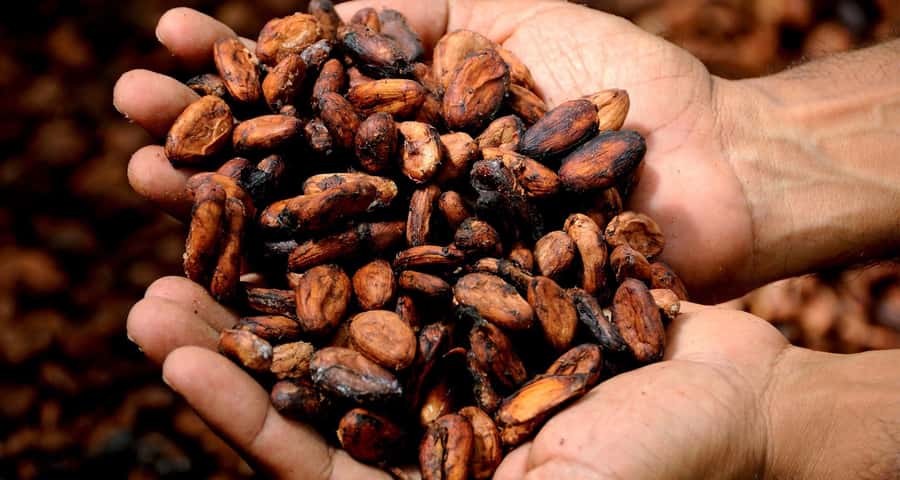
The session begins with a cocoa pod tasting. This is a useful opening because it resets your idea of what cocoa is. A finished chocolate bar is dry, smooth, and often sweet. A fresh cocoa pod is a fruit, with beans surrounded by pale pulp.
You taste the pod before the beans are roasted or ground. That first step helps you separate the fruit from the later chocolate-making stages. It also shows why cocoa farming is more than picking a ready-made ingredient from a tree. The beans need several changes before they become something you would recognize as chocolate.
I like this part because it gives the workshop a real starting point. Many chocolate experiences begin with melted chocolate and toppings. Here, you begin closer to the source, with the raw material in its original form.
The tasting also keeps the session grounded in agriculture. Chocolate is usually sold as a finished luxury food, but the pod reminds you that it begins as a crop grown, harvested, and processed by hand. That connection is one of the strongest reasons to choose this workshop over a standard confectionery class.
A walk through the cocoa garden

After tasting the pod, you walk through the cocoa garden. The guide explains the stages that take place at farm level, giving you a basic picture of how cocoa grows before it reaches the processing room.
The garden portion is not a separate sightseeing stop. It is part of the lesson. You see the plants and hear how cocoa moves from farm production to post-harvest handling. That context makes the later roasting and grinding steps easier to understand.
Keep your expectations practical. The information provided describes a cocoa garden tour, not a large plantation visit or a long agricultural excursion. The value is in seeing the crop and connecting it to the food on your worktable.
I find that useful for visitors who have eaten plenty of chocolate but have never seen cocoa growing. You do not need previous knowledge. The guide builds the story from the fruit upward, then takes you into the next stage.
Wear comfortable clothes that can get dirty. You are not simply walking through the garden and posing for a few pictures. The rest of the session involves food preparation and cocoa handling, so tidy clothing is less important than being ready to work.
Inside the processing room
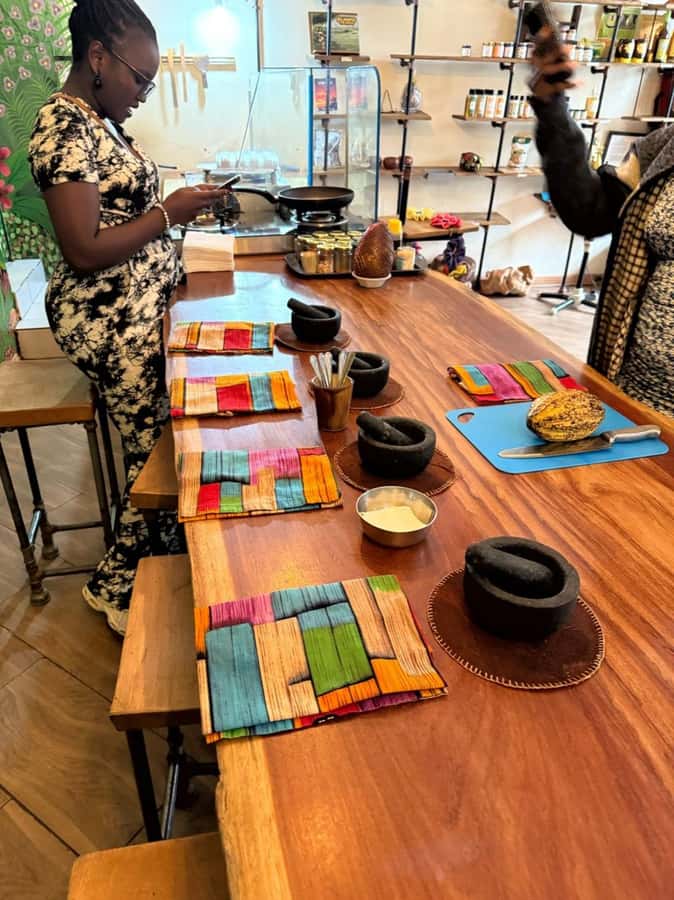
The next stop is the chocolate processing room. This is where the farm story becomes a production story. You learn what happens after cocoa leaves the garden and before it becomes a finished bar.
The hands-on work includes selecting cocoa beans, roasting, winnowing, and grinding. Each step changes the beans in a different way. Roasting brings out flavor, winnowing removes unwanted husk material, and grinding turns the prepared beans into a usable chocolate mixture.
You get to take part rather than watch every stage from a distance. That makes the session more memorable, but it also means the work can be messy and slower than opening a packet of chocolate at home. The point is not speed. The point is seeing how many steps sit behind a small bar.
This section is especially helpful if you enjoy food production, coffee, bread, or other craft-based activities. The workshop lets you see the raw ingredient change in front of you. You can taste along the way, so the process is not only visual.
The supplied apron is a sensible touch. You still need clothes that can get dirty, but you do not need to bring specialist equipment. Ingredients and chocolate-making tools are provided on-site.
A few more Kampala trips to weigh up
- Cooking Class for Typical Ugandan Food in Kampala
★ 5.0 · 25 reviews - Private Ugandan Food Cooking Class and Culture Experience
★ 5.0 · 6 reviews
Making a traditional Aztec chocolate drink
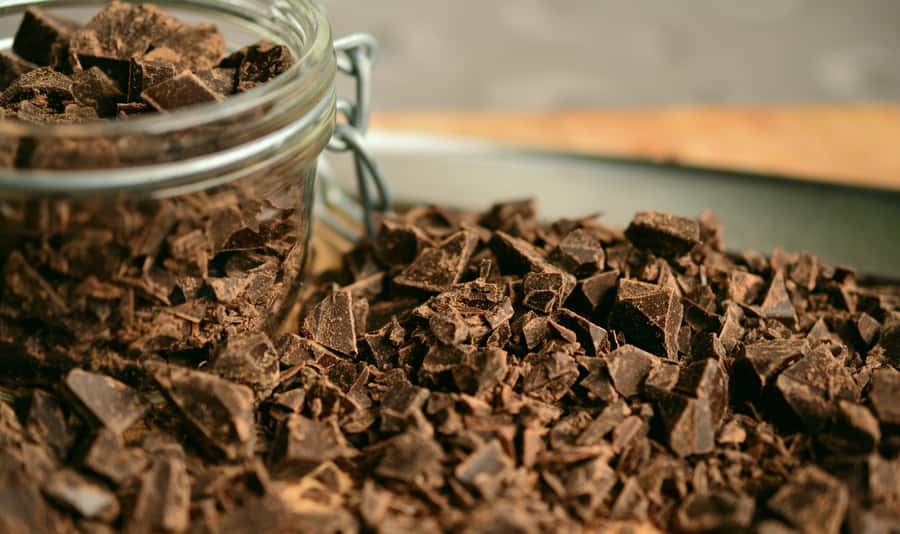
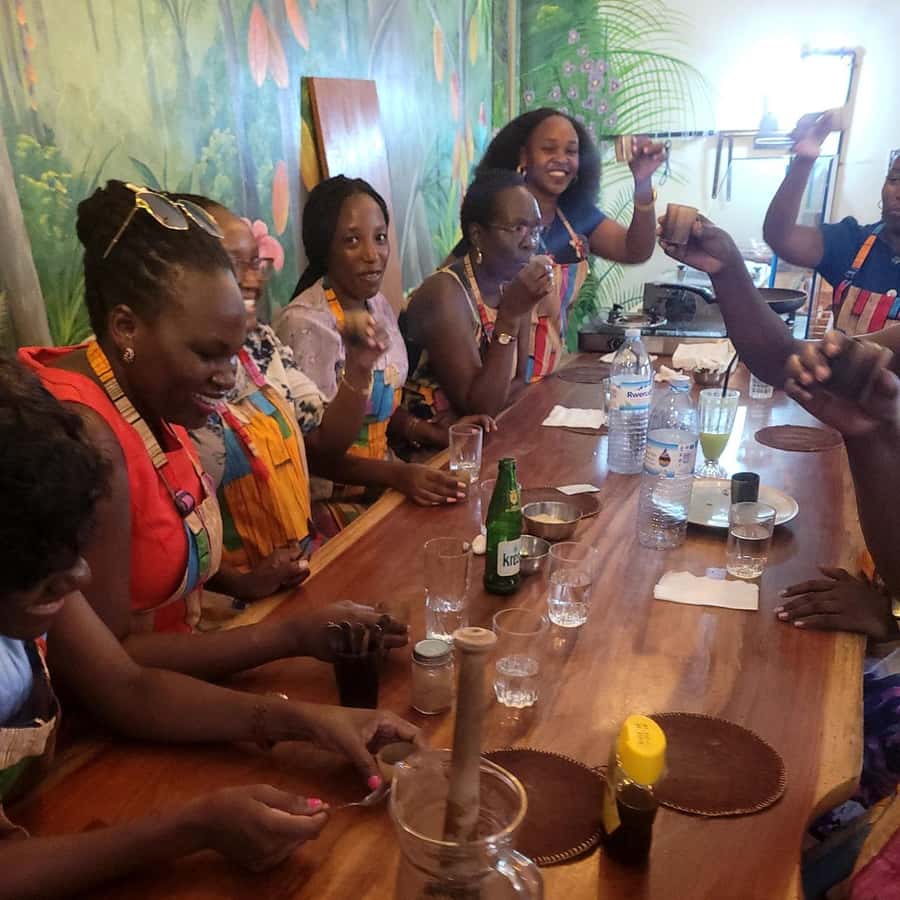
One of the more unusual parts of the session is the Aztec-style chocolate drink. You prepare and taste a rich, spicy drink connected to the older use of cocoa by ancient civilizations.
This is a good contrast with modern milk chocolate. The drink is not presented as another sweet snack. It gives you a different idea of what cocoa can taste like when spice and intensity are part of the mix.
The drink also breaks up the practical work. After handling beans and learning the processing stages, you get to taste the result in a form that is not yet a molded bar. I like that the workshop does not treat chocolate as one fixed flavor. The drink shows how preparation changes the character of cocoa.
If you prefer very mild, sweet chocolate, the spicy profile may not be your favorite part. Still, it is worth trying because it connects the ingredient to a wider food tradition rather than limiting it to modern confectionery.
Tempering, molds, and your own toppings
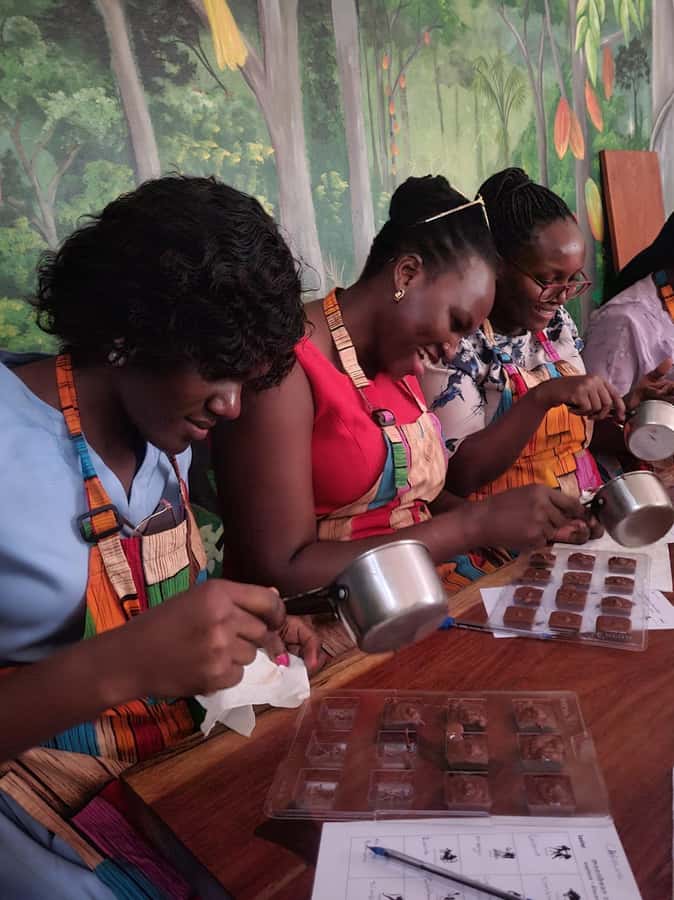
The final practical stage is making your chocolate bar. You temper the chocolate, pour it into molds, and add your own toppings before it sets.
Tempering is important because it affects the finished chocolate’s texture and appearance. It is also the stage where your work begins to look like a proper bar rather than a bowl of processed cocoa. You get a clear sense of how technique matters.
The topping choice gives the activity a personal finish. You are not taking home a bar made entirely by someone else. You have handled the ingredients, worked through the process, and chosen how the finished piece should look.
The completed chocolate is yours to take home. That makes the $29 price easier to assess. You are paying for a guided activity, ingredients, equipment, instruction, tastings, and a finished product, not simply for admission to a garden.
Do not expect to produce a large quantity of chocolate. The supplied information describes making your own chocolate bar, not a full box of sweets. The value is the process and the keepsake, with the added pleasure of sharing the result with friends later.
What the $29 price includes
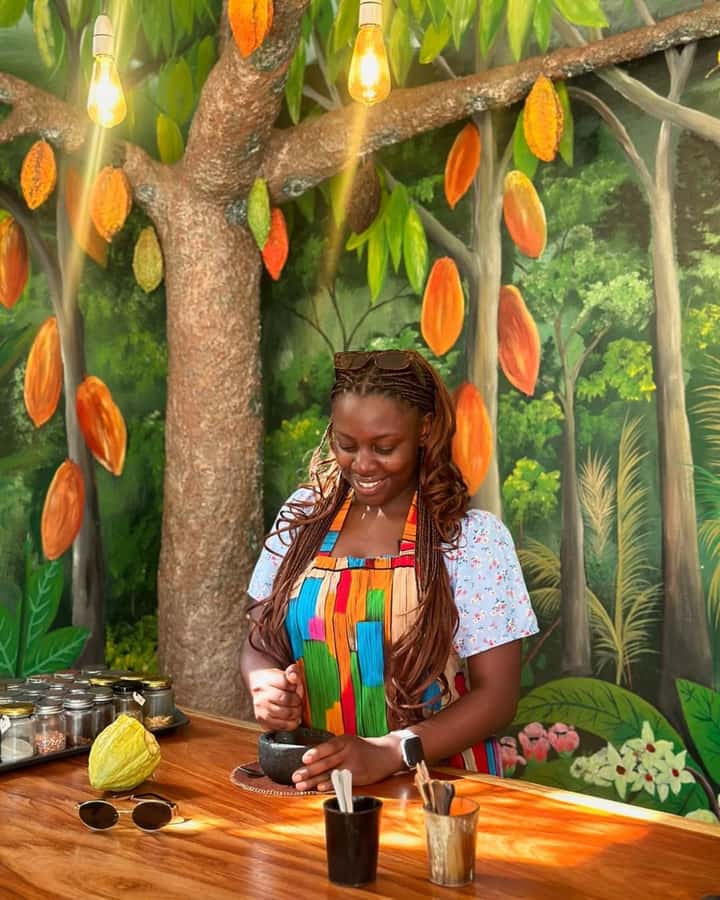
At $29 per person, this sits in the reasonable range for a two-hour food workshop, especially because the price includes the working materials and the chocolate you make.
You receive:
- A guided cocoa garden walk
- Fresh cocoa pod tasting
- A visit to the processing room
- Chocolate-making equipment and ingredients
- An apron for the session
- An Aztec chocolate drink tasting
- A handmade chocolate bar to take home
- English-language facilitation
The price does not include transport to or from Moonbean Chocolate, meals outside the activity, or personal purchases at the venue. Plan for those costs separately.
I would think of the fee as a small food class rather than a simple attraction ticket. You are paying for access to a process that would be difficult to recreate during an ordinary Kampala visit. The ability to taste the raw pod, handle the beans, and finish a bar gives the price solid value for anyone interested in food origins.
The value is weaker if your main goal is a large amount of chocolate. You can buy sweets more cheaply elsewhere. Choose this for the story, the hands-on work, and the chance to make something personal.
Meeting at Moonbean Chocolate in Bugolobi
The stated meeting point is Moonbean Chocolate, Plot 71, Luthuli Avenue, Bugolobi, at The Dancing Cup Restaurant, opposite Union House. Arrive at least 10 minutes early.
The nearby cafe is useful before or after the workshop. You can use it as a place to settle in, have a drink, or unwind once the session ends. Food and drinks outside the workshop are not included, so budget separately if you plan to eat there.
Transportation is not provided. Check your route and the exact meeting details in advance, especially because the broader activity information refers to Mityana District while the specific meeting point is in Bugolobi, Kampala. Do not assume that transport between separate locations is part of the booking.
Limited places are available, so advance booking is sensible. The experience lasts two hours, but starting times vary according to availability.
Who will enjoy this workshop most
I would recommend this to anyone curious about where food comes from and willing to get involved. Couples can turn it into an easy shared activity, while solo visitors have a natural setting for meeting the facilitator and working through the stages at their own pace.
Families can also enjoy it, but children under five are not accepted. Older children may appreciate the tasting and molding work, though parents should be ready for a process that includes heat, equipment, and some mess.
It is a good fit for:
- Chocolate fans who want more than a tasting
- Food-focused visitors in Kampala
- Couples looking for a short shared activity
- Families with children aged five and above
- Solo visitors who enjoy practical workshops
- Anyone interested in cocoa farming and food production
It is not suitable for people with food allergies. The activity involves cocoa and other provided ingredients, so anyone with an allergy should not book without clear confirmation that the session is safe for them.
Pets, alcohol, and drugs are not allowed. Bring a camera if you want pictures of the garden, the work stages, or your finished bar. Comfortable clothing is more important than dressing up.
Practical booking advice
The booking terms are flexible. You can reserve now and pay later, and cancellation is free up to 24 hours before the activity for a full refund. That helps if your Kampala schedule is still changing.
I would still book ahead because places are limited. Arriving early gives you time to find the meeting point and settle in before the group begins. Late arrival could mean missing the opening cocoa pod tasting, which is one of the most distinctive parts of the experience.
Bring a camera, but keep it secondary to the activity. There are several moments worth recording, and Joy can help with photos and videos, but your hands will often be occupied. An apron is provided, so you only need practical clothes and a willingness to work.
The experience has a 4.9 rating from 18 reviews, with especially strong praise for the fun, educational format and the chance to take part in nearly every stage. That matches the structure of the workshop: it is not just a chocolate tasting with a short explanation attached.
Should you book the Moonbean workshop?
Book it if you want a short, hands-on food experience that connects Kampala with cocoa farming and small-scale chocolate production. The raw pod tasting, garden walk, Aztec drink, and handmade bar give the session more depth than a basic confectionery class.
Skip it if you are looking only for a large dessert, a long plantation tour, or an activity with transport included. Also check the location details carefully because the specific meeting point is in Bugolobi, while the general location information names Mityana District.
For $29, I think it is a strong choice for curious eaters, couples, families with older children, and solo visitors who like to learn by doing. You leave with both a clearer idea of the cocoa process and a chocolate bar made by your own hands.
FAQ
How long does the chocolate-making experience last?
The activity lasts two hours.
Where is the meeting point?
The meeting point is Moonbean Chocolate, Plot 71, Luthuli Avenue, Bugolobi, at The Dancing Cup Restaurant, opposite Union House.
Is transportation included?
No. Transportation to and from the venue is not included.
What do I make during the workshop?
You help select, roast, winnow, and grind cocoa beans, prepare an Aztec-style chocolate drink, then temper chocolate and pour it into a mold with your chosen toppings.
Can I take the chocolate home?
Yes. The chocolate bar you make during the session is yours to take home.
Is the activity suitable for young children or people with food allergies?
Children under five are not permitted, and the experience is not suitable for people with food allergies.
Just added around Kampala
- 7-Day Uganda Adventure Safari – Midrange Lodges★ 5.0 · 3 reviews
- Entebbe kampala airport transfers★ 5.0 · 3 reviews
- 5 days gorillas and chimpanzee tracking★ 4.5 · 3 reviews
- A Thrilling 1-Day Rhino Tracking Tour in Uganda★ 5.0 · 3 reviews
- 4-Day QENP, Gorillas in Bwindi and Lake Bunyonyi relaxation★ 5.0 · 3 reviews
- 3 Days Murchison Falls Wildlife Safari★ 4.5 · 3 reviews
- Kampala: Female-Guided Walking Tour★ 3.7 · 3 reviews
- 3 Days Private Tour in Murchison Falls National Park★ 5.0 · 3 reviews
Workshops, compared.
Cooking Class for Typical Ugandan Food in Kampala
Read our review →
Private Ugandan Food Cooking Class and Culture Experience
Read our review →Browse the lists this tour appears in