
Reviewed · WALKING TOURS
Kampala Guided walking Tour
Kampala reveals itself best at street level, and this tour takes you from national monuments to fruit stalls, crowded taxi routes, a huge second-hand market, and the hilltop view from Gaddafi National Mosque. It is less about polished sightseeing and more about seeing how the city works.
I like the small group limit of 10, which should make it easier to ask questions and keep up on foot. I also like the chance to taste fresh market fruit and learn about Buganda at Kabaka’s Palace, two details that give the walk more character than a simple monument checklist.
The main consideration is that this is a real city walk, not a gentle stroll through a quiet historic district. You need moderate physical fitness, and two major admissions cost extra: 25,000 Ugandan shillings for the mosque and $10 for the palace.
Key points to know before booking
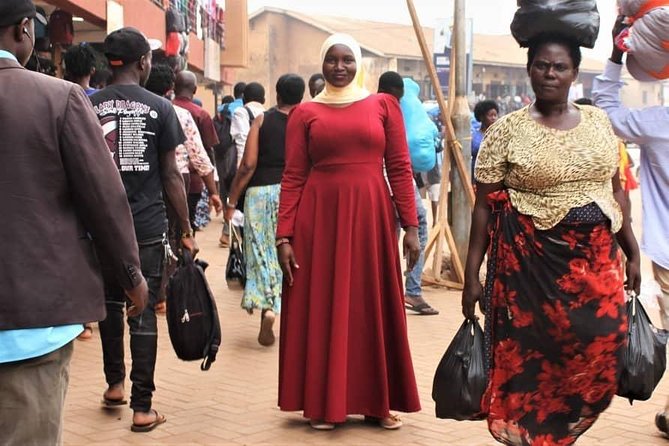
- Kampala at street level: Walk through markets, the Old Taxi Park, and central streets rather than viewing the city only from a vehicle.
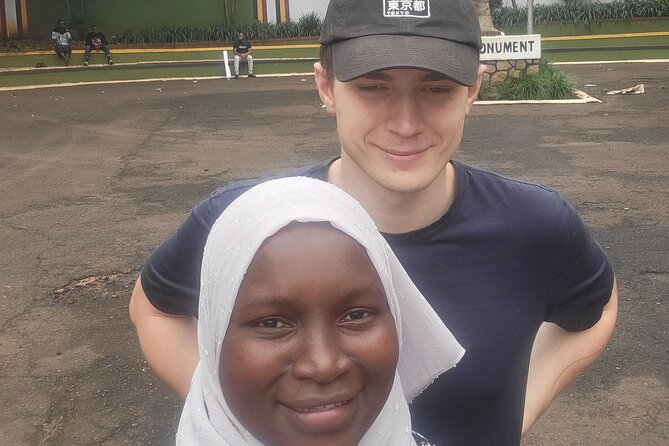
- Fridaus may guide your walk: A review specifically praises a guide named Fridaus for explaining Kampala’s culture and history clearly.
- Fresh fruit at Nakasero Market: You may buy and taste fruit such as avocado during the market stop.
- Best city view: The Gaddafi National Mosque minaret offers a high point from which to look back across Kampala.
- Buganda’s royal story: Kabaka’s Palace covers the Buganda Kingdom, Idi Amin’s cannon, and the palace torture chambers.
- Budget for two extra fees: The $30 tour price does not include 25,000 UGX for the mosque or $10 for the palace.
Why this walk gives you a useful first look at Kampala
Kampala is not a city you understand from one grand square or one famous building. Its character comes from the contrast between formal monuments, religious sites, markets, traffic, and daily commerce. This route puts those pieces together in one outing.
You begin with national and royal symbols, then move into food markets and transport hubs. Later, you gain a wider view from the mosque and a cultural explanation of the Buganda Kingdom. That order gives the walk a sensible shape: first the country, then the city, then the kingdom that remains important to Uganda’s cultural life.
The tour costs $30 per person and usually lasts between two and five hours. That wide time range matters. The stated stops add up to about three hours and 20 minutes before walking between them, waiting, and handling the palace visit. Your pace and the exact route will affect the total, so do not schedule a tight appointment immediately afterward.
I would consider this a good first-day activity if you want help finding your bearings in central Kampala. It also suits travelers who prefer questions and conversation over a guide who simply points at buildings. The group can have no more than 10 people, which is a useful balance between social company and personal attention.
A few more Kampala trips to weigh up
- Kampala’s Best Experience walking tour
★ 5.0 · 137 reviews - Kampala Walking City Tours (Women Guided)
★ 5.0 · 115 reviews - Kampala Walking Tour (3 Hours) with Optional Gaddafi Mosque Visit
★ 5.0 · 112 reviews
Independence Monument and Uganda’s road to self-rule
The Independence Monument is a natural place to begin. You have time to take photographs and sit while your guide explains Uganda’s movement from rule by the king to independence.
The stop is listed at 15 minutes, so expect a brief introduction rather than a long museum visit. That is enough for a quick orientation, especially if Uganda’s political structure and modern history are new to you. The itinerary also refers to the Kabaka Muteesa II Monument, giving you a second chance to connect national independence with Buganda’s royal tradition.
This pairing is useful. You are not looking at independence as an isolated national event. You are also hearing about the king who remained part of Uganda’s story. The tour later returns to that royal theme at Kabaka’s Palace, so pay attention to names and titles here.
Admission to the Independence Monument is included, and the stop is easy to combine with photographs. Keep your expectations realistic: the value is in the guide’s explanation and the connection between sites, not in spending a long time at the monument itself.
Nakasero Market and the taste of Kampala
At Nakasero Market, the focus turns from national symbols to food. Uganda grows a great deal of produce, and you get the chance to see fruit being sold and taste items such as fresh avocado.
The stop is scheduled for 15 minutes. That is short, but it can still give you a useful glimpse of the market’s role in the city. If you want to buy something, keep the visit focused and ask your guide how the process works. The supplied information does not specify which fruits will be available on a particular day, so treat the avocado as an example rather than a guarantee.
I like this part of the route because tasting food makes a city easier to remember. It also breaks up the monuments and lets you see an ordinary commercial setting. You are not just hearing that Uganda produces food. You are looking at the produce and possibly sampling it.
The market may feel crowded and active, and walking conditions can be less predictable than at a monument. Wear shoes suited to a city walk and keep your belongings secure. Those are sensible habits for any busy market, though the tour information does not give specific security instructions.
The Old Taxi Park and Kampala’s organized chaos
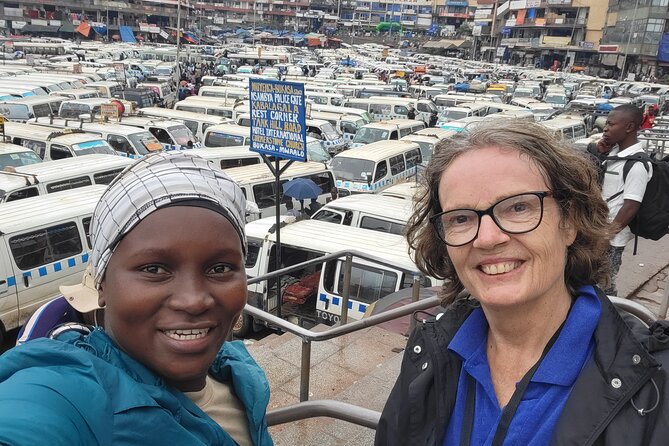
The Old Taxi Park gives you a close look at how people move around Kampala. The route passes through the taxi park so you can see passengers finding vehicles for different destinations.
This stop lasts about 40 minutes, making it one of the longer parts of the central-city walk. You also have time to rest in one of Kampala’s buildings and look down over the taxi park and the city center from above.
That combination is smart. At street level, the taxi park can be hard to read at first. Vehicles, people, and destinations all seem to compete for your attention. From above, the layout becomes easier to understand. You get both the human scale and the wider view.
The phrase organized chaos fits the experience well, but do not mistake busy movement for a staged attraction. This is part of Kampala’s transport system. You are seeing a working city, not a performance arranged for visitors.
The tour is conducted on foot, so you should be ready for noise, traffic, and a steady amount of walking. The information says the activity requires a moderate level of physical fitness. That warning is worth taking seriously, particularly if heat, crowds, or uneven streets make walking tiring for you.
Same base, a completely different kind of trip:
- 3 Hours Guided Cycling Tour Across Lake Victoria
★ 5.0 · 151 reviews - 3 Days gorilla trekking Safari tour in Uganda
★ 5.0 · 121 reviews - Lake Victoria Island Cycling Tour from Kampala
★ 5.0 · 120 reviews - Steve Kampala Walking tours (Airpals Safaris tour)
★ 5.0 · 89 reviews
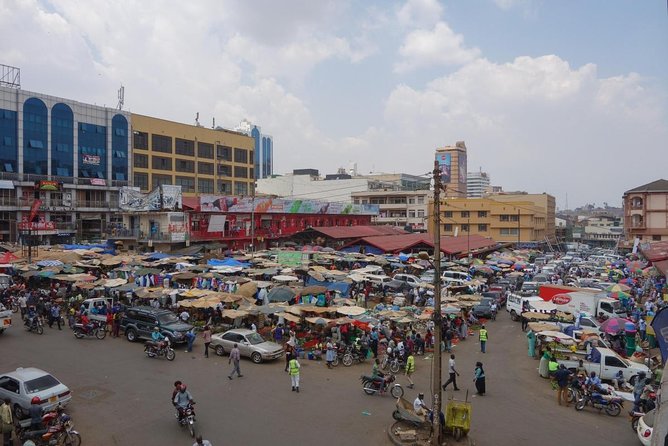
Owino Market, where Kampala sells almost everything
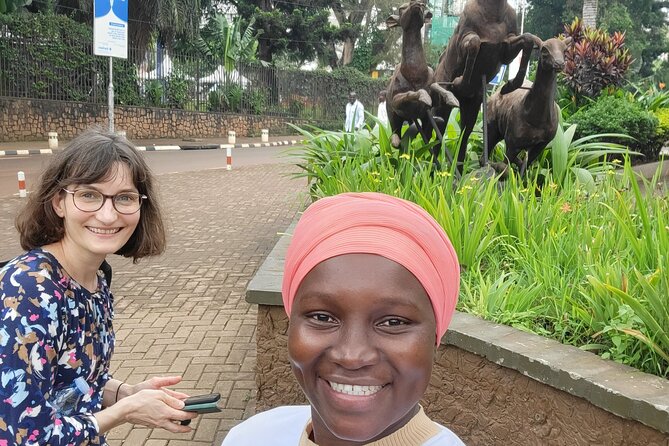
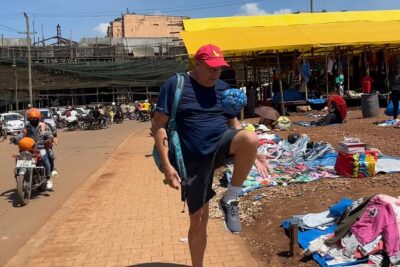
Owino Market, also called Kampala Market, is described as the largest market in Kampala. The goods include second-hand clothes, shoes, bags, and food, with household items also available.
You have about 25 minutes here. That gives you a quick passage through a very large commercial space rather than time to inspect every section. If you enjoy markets, you may wish the stop were longer. If crowded shopping areas drain you, the limited timing may be welcome.
The appeal is variety. One stall may focus on clothing, another on shoes, another on food or household needs. This is a good place to understand how much buying and selling happens outside formal shops. It also shows the practical side of Kampala, where a market can serve many daily needs in one place.
Keep your plans simple. You can look, ask questions, and perhaps shop, but you should not expect a relaxed browsing session while staying with the group. The tour information does not say whether bargaining or specific purchases are part of the guided experience, so treat shopping as optional rather than a central promise.
Like Nakasero Market, Owino is most valuable when you pay attention to ordinary life. The guide can help explain what you are seeing, and the short stop keeps the day moving toward the mosque and palace.
Gaddafi National Mosque and the view from the minaret
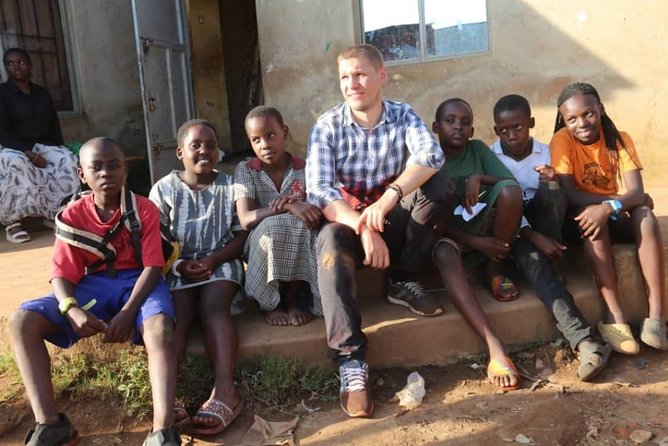
Gaddafi National Mosque is the tour’s high point in both senses. It sits in the middle of Kampala, and you walk up the minaret for a broad view of the city.
The stop lasts about 45 minutes. That allows time to go up, take in the view, and look back at the parts of Kampala covered during the walk. The guide describes this as the place to bring the whole route together, and that makes practical sense. After seeing the taxi park, markets, monuments, and city center from ground level, the elevated view helps you connect them.
The mosque admission is not included in the $30 price. The additional fee is 25,000 UGX. Budget for it before you arrive, and remember that the ascent requires physical effort. The tour information does not provide details about lift access, dress requirements, or photography rules, so ask the operator ahead of time if any of those points matter to you.
This stop may be especially rewarding if you like city views. It is not only a lookout. It gives the guide a chance to explain how the different parts of Kampala fit together. Still, the view depends on weather and visibility, and the entire activity requires good weather. If poor weather cancels the tour, you are offered another date or a full refund.
Kabaka’s Palace and the Buganda Kingdom

Kabaka’s Palace is the most substantial historical stop, with about an hour set aside for the visit. Uganda has several kingdoms that continue as cultural institutions, and the Buganda Kingdom is the largest of them. The king, or Kabaka, serves as a cultural leader under Uganda’s national presidential system.
The palace visit gives you a way to understand that relationship. You are not simply touring an old royal residence. You are learning how traditional kingdoms remain part of modern Uganda while political authority belongs to the national government.
The visit includes the palace, Idi Amin’s cannon, and the torture chambers. These subjects are difficult, but they are important to the story of the site. The palace is not presented only as an elegant royal building. It also carries evidence of a painful period in Uganda’s past.
There is a separate payment at the visitor’s office, listed as $10. The tour details say you will make that payment there before taking the palace tour. Since this charge is not included, carry a payment method that works for you and confirm the current amount when booking.
This stop can be emotionally heavier than the markets or monuments. Give yourself time to listen carefully and ask questions. The earlier visit to the Kabaka Muteesa II Monument also makes more sense after you learn about the kingdom’s place in Ugandan life.
What the $30 price really covers
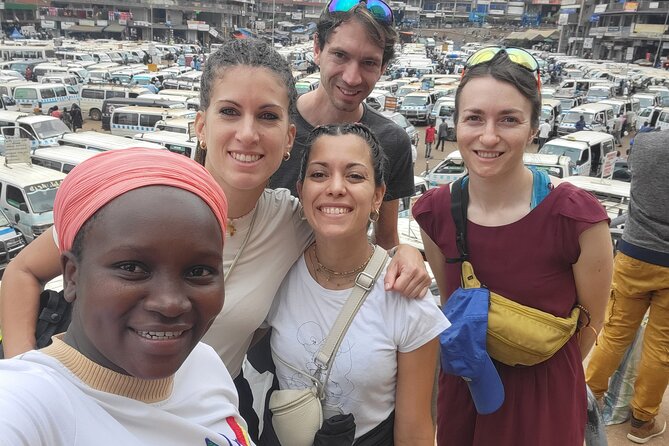
At $30 per person, the tour offers a guide, a structured route, and access to several central Kampala sights. The price also includes admission entries listed for the Independence Monument, National Theatre, Nakasero Market, Hindu Temple, Old Taxi Park, Owino Market, Gorilla Monument, and Impala Monument.
Not all of those places appear as separate timed stops in the main route. That means the exact walk may include additional monuments or pass nearby, depending on the guide and the day. If National Theatre, the Hindu Temple, Gorilla Monument, or Impala Monument is particularly important to you, ask for clarification before booking.
The two larger extras are easy to identify:
- Gaddafi National Mosque: 25,000 UGX
- Kabaka’s Palace: $10
Hotel drop-off is also not included. The tour information mentions nearby public transportation, so you should plan your own return from the end of the walk. No hotel pickup or drop-off service is promised in the price.
I see the value mainly in the human explanation. A self-guided walk could take you past the same streets, but it would be harder to understand the link between the markets, the transport system, the mosque, Uganda’s independence, and Buganda’s royal structure. The price is fair if you want that context and are comfortable paying the two site fees separately.
How to prepare for the walking route
Wear comfortable shoes and plan for a moderate physical effort. The route includes markets, city streets, the taxi park, and a climb up the mosque minaret, so this is not suitable for someone seeking a seated sightseeing tour.
A mobile ticket is provided, and confirmation is sent at booking. The tour is near public transportation, but hotel drop-off charges are excluded. Since the duration can range from two to five hours, leave space in your schedule rather than treating the shorter estimate as guaranteed.
Good weather is required. If rain or other poor conditions causes cancellation, you can choose a different date or receive a full refund. For your own flexibility, avoid booking the walk just before a flight, long-distance transfer, or fixed evening reservation.
The cancellation policy allows a full refund when you cancel at least 24 hours before the start time. Cancellations made within 24 hours are not refunded, and changes inside that period are not accepted. Cut-off times use Kampala’s local time.
Who will get the most from this Kampala tour
I would choose this walk if you want a first look at Kampala that combines daily life with major cultural sites. It is a good fit for you if you enjoy markets, city transport, photographs, and asking a local guide how places connect.
It also suits travelers who want a small-group setting. With a maximum of 10 people, the guide has a better chance to hear your questions than on a large coach excursion. Fridaus is specifically praised for explaining Kampala’s culture and history clearly, so you can request her if the operator allows guide selection, though the tour information does not guarantee her availability.
I would think twice if you dislike crowds, have difficulty walking for several hours, or want a quiet palace and museum experience. The route passes through active parts of Kampala, and the markets and taxi park are working places. The palace’s torture chambers may also be upsetting for some people.
The rating is 5 from four reviews, which is encouraging but still a small sample. I would treat the positive feedback as a useful sign, not as a guarantee that every guide or route will feel identical.
Should you book the Kampala Guided Walking Tour?
Book it if you want an affordable, compact introduction to Kampala built around real streets, markets, transport, religion, and Buganda culture. The best reasons are the small group size, the market visits, the mosque view, and the chance to connect modern Kampala with the kingdom that shaped much of the area.
Before paying, make sure the extra costs suit your budget. Add 25,000 UGX for Gaddafi National Mosque and $10 for Kabaka’s Palace, then plan your own transport afterward. If you can handle the walking and want more than a quick drive past landmarks, this is a sensible way to spend a half day in Kampala.
FAQ
How much does the Kampala Guided Walking Tour cost?
The tour costs $30 per person. Entrance to Gaddafi National Mosque and Kabaka’s Palace is not included.
How long does the walking tour last?
The activity lasts approximately 2 to 5 hours. The listed stops total about three hours and 20 minutes before time spent walking between locations.
What is the maximum group size?
The tour accepts a maximum of 10 travelers.
Is the tour available with a mobile ticket?
Yes. A mobile ticket is provided, and confirmation is received at the time of booking.
What is the extra fee for Gaddafi National Mosque?
Entrance to Gaddafi National Mosque costs 25,000 UGX and is paid separately.
What is the extra fee for Kabaka’s Palace?
Entrance to Kabaka’s Palace costs $10 and is paid separately at the visitor’s office.
Is hotel drop-off included?
No. Hotel drop-off charges are not included in the tour price.
Does the tour require physical fitness?
Yes. Participants should have a moderate level of physical fitness because the activity involves walking and includes going up the mosque minaret.
What happens if bad weather cancels the tour?
If poor weather causes cancellation, you can choose another date or receive a full refund.
Can I cancel for a full refund?
Yes, if you cancel at least 24 hours before the experience start time. Cancellations and changes made within 24 hours are not refunded or accepted.
Just added around Kampala
- 7-Day Uganda Adventure Safari – Midrange Lodges★ 5.0 · 3 reviews
- Entebbe kampala airport transfers★ 5.0 · 3 reviews
- 5 days gorillas and chimpanzee tracking★ 4.5 · 3 reviews
- A Thrilling 1-Day Rhino Tracking Tour in Uganda★ 5.0 · 3 reviews
- 4-Day QENP, Gorillas in Bwindi and Lake Bunyonyi relaxation★ 5.0 · 3 reviews
- 3 Days Murchison Falls Wildlife Safari★ 4.5 · 3 reviews
- Kampala: Female-Guided Walking Tour★ 3.7 · 3 reviews
- 3 Days Private Tour in Murchison Falls National Park★ 5.0 · 3 reviews
Walking Tours, compared.
Steve Kampala Walking tours (Airpals Safaris tour)
Read our review →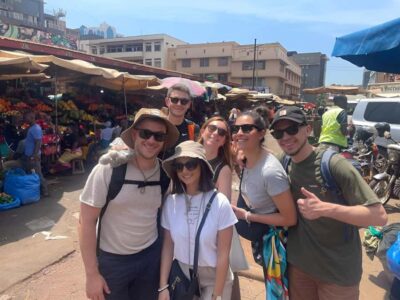
Kampala: 3-Hour Walking Tour with Optional Gaddafi Mosque
Read our review →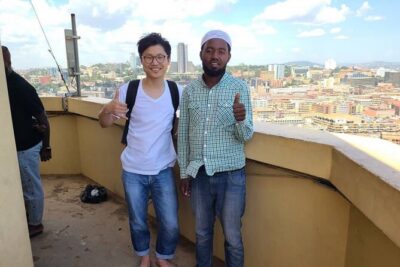
Kampala Half-Day Walking Tour with Local Female Guides
Read our review →
Entebbe Walking Tour (3 Hours) with Zoo and Botanical Gardens Options
Read our review →Browse the lists this tour appears in