
Reviewed · EQUATOR CROSSINGS
Private Guided Equator Tour Experience Uganda
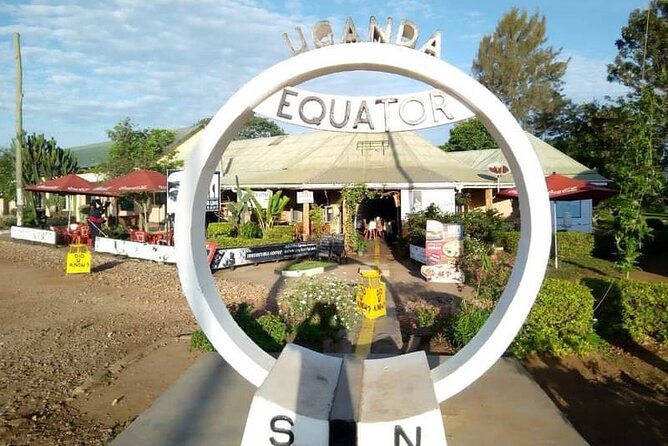
The best part of this private day trip is the simple, memorable moment when you stand with one foot in the Northern Hemisphere and one in the Southern Hemisphere. At the equator stop on Masaka Road, your guide points out the 0-degree latitude line, explains the site, and shows a water experiment that sends water in different directions on either side of the line.
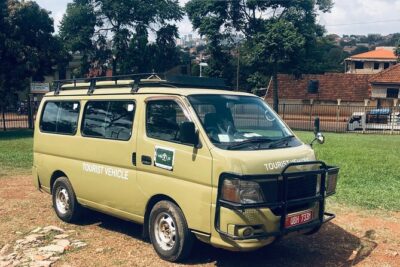
I like the private vehicle and pickup from Kampala, since reaching Kayabwe independently can take more planning than the monument itself suggests. I also like the chance to see villages and ordinary roadside life beyond the capital, with a guide such as Moses adding local context during the drive. The main drawback is the long round trip for a stop that takes about two hours, so this suits you best if the equator is a must-see rather than a quick side stop.
Key points to know before you book
- The water experiment is the main hands-on moment: You watch water drain clockwise north of the equator, counter-clockwise south of it, and straight down at 0 degrees latitude.
- A private tour keeps the day personal: Only your group takes part, so you can ask questions and set the pace within the planned day.
- Kampala pickup removes the transport headache: Round-trip transfer is included, which matters for a rural stop outside the capital.
- The drive is part of the experience: You pass through villages and see a more rural side of Uganda on the way to and from the monument.
- Moses may be available as your guide: He is praised for considerate service, local knowledge, gift-buying tips, and help arranging lunch.
- The full outing takes about eight hours: The equator activity itself lasts about two hours, with the rest of the day taken up by transport and stops along the route.
Why the Kayabwe equator stop is worth your time
Uganda’s equator monument at Kayabwe is a classic first-visit photo stop, but it works because the idea is so easy to grasp. You do not need a long lecture or specialist knowledge. You simply stand on the marked line, look toward the two hemispheres, and take in the fact that this imaginary circle crosses the entire planet.
The setting also gives the stop more meaning than a quick roadside photograph. You leave Kampala and pass through rural communities on Masaka Road. The guide can explain what you are seeing along the way, turning the drive into part of the day rather than dead time between attractions.
I would not book this as a major scientific tour. The water demonstration is presented as proof of different effects north, south, and directly on the equator. It is a fun visual display, but you should treat it as a tourist demonstration rather than a full lesson in physics. Its value is in the surprise and the memory, not in replacing a science textbook.
That distinction matters. You can enjoy the show, photograph the three positions, and still keep a clear head about what it demonstrates. A good guide should explain the experience in simple terms without making the whole day feel like a classroom.
More equator stops on the way south:
- Discover the Magic of Uganda’s Equator on a 1-Day Tour
★ 5.0 · 12 reviews - Lake Mburo National Park with Equator, Game Drive & Cruise
★ 3.7 · 12 reviews - Equator Tour (Airpals Safaris tour)
★ 5.0 · 9 reviews
Leaving Kampala for the rural road
Your day begins with pickup in Kampala, followed by a drive toward the equator site on Masaka Road. The tour lasts about eight hours in all, so you should plan for a full day rather than a quick morning outing.
The supplied details do not give a fixed departure time, exact driving distance, or a detailed schedule of roadside stops. That means you should confirm the pickup hour when booking and ask how much time the driver expects to spend on the road. Traffic and road conditions can affect the day, and the equator stop itself is only one part of the outing.
The private format is the big practical advantage here. You do not have to make your way to Kayabwe by public transport, work out where to get off, or arrange a separate return. You also have one guide focused on your group instead of trying to hear explanations in a crowd.
During the drive, look beyond the main road. The route passes villages and offers a glimpse of daily life outside Kampala. I like this part because it gives the equator visit some local setting. The monument is the headline attraction, but the changing surroundings help you understand that Uganda is more than its capital.
A guide with strong local knowledge can point out details you would otherwise miss. Moses is specifically praised for being considerate during the drive and for sharing local information on the way out and back. If you want him as your guide, ask the provider if he is available, since guide assignment is not guaranteed by the tour details.
Arriving at 0 degrees latitude
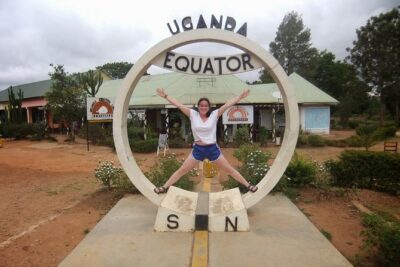
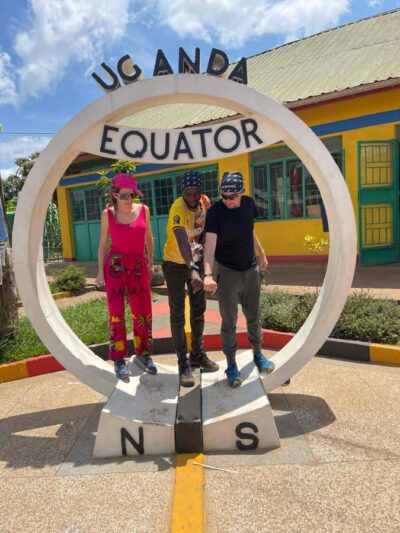
At Green Equator on Masaka Road, your guide shows you where 0 degrees latitude crosses Uganda. The marked equator line separates the Northern Hemisphere from the Southern Hemisphere, giving you an obvious place to orient yourself.
This is the moment for the familiar photograph: one foot north, one foot south, or a pose centered on the line. You may also want a picture at the monument and a few shots that show the surrounding setting. The stop is built around visual memories, so give yourself time to take them instead of rushing through the demonstration.
Your guide explains the difference between the two sides of the equator and points out the directions of the hemispheres. That personal explanation is more useful than simply arriving, taking a picture, and leaving. You can ask questions in plain language and have the guide repeat anything that is unclear.
The admission ticket is listed as free. That makes the value of the $150 per person price depend mainly on the private transport, guide service, and length of the day. If you are already arranging a vehicle and driver for other Uganda sightseeing, this tour may feel expensive for one main attraction. If you are staying in Kampala and want the equator visit handled in one package, the price is easier to justify.
The water experiment, north, south, and center
The demonstration begins on the Northern Hemisphere side. Water is poured into a container with a hole, and it is shown draining in a clockwise direction.
On the Southern Hemisphere side, the same setup is used to show water draining counter-clockwise. At the 0-degree line, the water is shown going straight down. The quick change from one direction to another is the part many people find surprising.
The demonstration is easy to follow because you see all three versions in sequence. You do not need to prepare in advance, and the guide can explain what is happening as you watch. It also gives the stop a little more substance than a monument photo alone.
Still, keep the claim in proportion. The presentation attributes the different flow directions to magnetic effects, but the demonstration is not a detailed scientific test. Small changes in how water is poured, the shape of the basin, and other conditions can affect a draining swirl. I would enjoy it as a lively tourist display and avoid treating it as final scientific proof.
That does not make the experience pointless. Travel is full of moments that stay with you because they are simple and physical. Here, you can see the water change, stand on the line, and explain the scene to someone at home later. The guide-led format also means you are not left guessing what each station is meant to show.
The stop lasts about two hours, and admission is listed as free. That is enough time for the explanation, the water display, photographs, and a relaxed look around without making the attraction feel overlong.
A few more Kampala trips to weigh up
- 3 Hours Guided Cycling Tour Across Lake Victoria
★ 5.0 · 151 reviews - Kampala’s Best Experience walking tour
★ 5.0 · 137 reviews - 3 Days gorilla trekking Safari tour in Uganda
★ 5.0 · 121 reviews - Lake Victoria Island Cycling Tour from Kampala
★ 5.0 · 120 reviews
A private day instead of a crowded group outing
Only your group participates in this activity. That gives you more control over the rhythm of the day, even though the overall duration remains about eight hours.
If you enjoy asking questions, the private arrangement is useful. You can ask about the equator, the villages along the route, local customs, or places to buy small gifts. You also avoid the common group-tour problem of waiting while strangers finish photographs.
Moses is described as attentive and considerate, with good local knowledge during the drive. He also gives recommendations for where to buy small gifts and helps make meal arrangements. Those details matter because a guide’s value is not limited to the monument. Practical help can make an unfamiliar day feel easier.
The private format is especially useful for families, couples, or small groups with a shared interest in the equator. It can also suit you if you prefer not to spend a day following a large flag or fixed group schedule.
The trade-off is cost. At $150 per person, the tour is not the cheapest way to see a roadside attraction, particularly for a solo visitor. The price becomes more attractive when several people share the private experience and when you place a high value on door-to-door transport and personal attention.
What the drive adds to the experience
A common mistake would be to judge this outing only by the time spent at the monument. The stop itself is straightforward. The rural drive gives you the wider Ugandan setting that makes the day more worthwhile.
You pass through villages on the way to the equator. The information does not provide a fixed list of places or formal village visits, so do not expect a separate cultural tour with scheduled walking stops. Instead, expect to see roadside life from the vehicle and hear explanations from your guide as the route unfolds.
That distinction helps you set realistic expectations. This is not a village homestay, food tour, or long countryside walk. It is a private drive to a well-known landmark, with local observations added along the road.
I like that balance for a first visit. You get a clear attraction at the end of the route, but you also see a little of the country between Kampala and Kayabwe. If you have already spent many days touring rural Uganda, the scenery may feel less new. If Kampala is your base, the change of setting can be a welcome part of the day.
The return journey gives you another chance to ask questions or follow up on things you noticed earlier. Since the guide accompanies you both ways, you are not left to arrange your return from the equator site.
Price, timing, and who gets the best value
The cost is $150 per person for an approximately eight-hour private experience. Pickup is offered, a mobile ticket is available, and only your group takes part.
The free admission at the equator site is worth noting. You are mainly paying for the transfer, guide, convenience, and private service. That can be good value if you would otherwise need to hire transport separately and organize the route yourself.
For a group of friends or family, the private setup may make more financial sense than it does for one person. For a solo visitor, the price deserves closer thought. Compare it with the cost and effort of arranging your own round-trip transport, then decide how much you value having a guide who handles the day.
The eight-hour length also affects value. The equator demonstration takes about two hours, so roughly six hours may be spent traveling or handling the day around the main stop. You should book this because you want the full outing, not because you expect six hours of activities at the monument.
The cancellation terms are generous if your plans may change: cancel at least 24 hours before the start time for a full refund. Cancellations inside 24 hours are not refunded, and changes made inside that period are not accepted. Cut-off times use local time.
Small details that make the day easier
Confirmation is provided at the time of booking, and a mobile ticket is supported. Service animals are allowed, and the experience is near public transportation, though pickup is offered for the private tour.
The activity says most people can participate. No special fitness requirement is listed, but the supplied information does not describe surfaces, restrooms, shade, or detailed facilities at the stop. If any of those points matter to you, ask before booking.
Bring a phone or camera for the monument and water demonstration. The experience is strongly visual, and the photos are part of the appeal. The information also refers to a certificate as a memorable part of the visit, but it does not specify whether that is included for every booking, so confirm that detail with the provider.
You may want to leave room in your day for small gifts. Moses is noted for recommending places to buy them, which can be handy if you want a modest souvenir without spending time searching on your own.
The tour provider is Gorilla safari uganda. The activity is private, and the local guide is central to the experience, so it is sensible to confirm the guide’s name, pickup point, start time, lunch arrangements, and certificate details before departure.
Should you book the Kampala equator tour?
Book it if you want the classic equator photograph, prefer private door-to-door transport, and like the idea of seeing rural Uganda during the drive. It is a good first-visit choice for couples, families, and small groups that want a simple day outside Kampala without arranging every detail themselves.
I would be more cautious if you are traveling alone on a tight budget or if you expect a full day of major sights. The main attraction is compact, admission is free, and much of the eight-hour schedule is taken by transport.
For the best fit, think of this as a memorable landmark day trip, not a full cultural tour or scientific lesson. The water demonstration is fun, the hemisphere photo is an easy travel memory, and a considerate guide such as Moses can add real value on the road. If those elements match what you want from Uganda, the $150 price can be fair for the convenience and privacy.
FAQ
Where does the equator tour begin?
The tour begins in Kampala, with pickup offered for the journey to Uganda’s equator site on Masaka Road.
How long does the experience last?
The full experience lasts approximately eight hours. The equator stop itself takes about two hours.
Is this a private tour?
Yes. This is a private activity, and only your group participates.
What will I see at the equator stop?
Your guide points out the 0-degree latitude line, the Northern Hemisphere, and the Southern Hemisphere. You can also watch the water-flow demonstration and take photographs at the equator monument.
Is admission to the equator stop included?
Admission to the Green Equator Masaka Road stop is listed as free.
What does the water demonstration show?
The demonstration shows water draining clockwise on the Northern Hemisphere side, counter-clockwise on the Southern Hemisphere side, and straight down at the equator.
How much does the tour cost?
The listed price is $150 per person.
Can I cancel for a full refund?
Yes, if you cancel at least 24 hours before the experience starts. Cancellations made less than 24 hours before the start time are not refunded.
Are service animals allowed?
Yes. Service animals are allowed, and most people can participate in the activity.
Just added around Kampala
- 7-Day Uganda Adventure Safari – Midrange Lodges★ 5.0 · 3 reviews
- Entebbe kampala airport transfers★ 5.0 · 3 reviews
- 5 days gorillas and chimpanzee tracking★ 4.5 · 3 reviews
- A Thrilling 1-Day Rhino Tracking Tour in Uganda★ 5.0 · 3 reviews
- 4-Day QENP, Gorillas in Bwindi and Lake Bunyonyi relaxation★ 5.0 · 3 reviews
- 3 Days Murchison Falls Wildlife Safari★ 4.5 · 3 reviews
- Kampala: Female-Guided Walking Tour★ 3.7 · 3 reviews
- 3 Days Private Tour in Murchison Falls National Park★ 5.0 · 3 reviews
Equator Crossings, compared.
Lake Mburo National Park with Equator, Game Drive & Cruise
Read our review →
Discover the Magic of Uganda’s Equator on a 1-Day Tour
Read our review →
Browse the lists this tour appears in